
Daily puja
Complete Hindu Puja Samagri List for Home Worship: A Traditional Guide
Oct
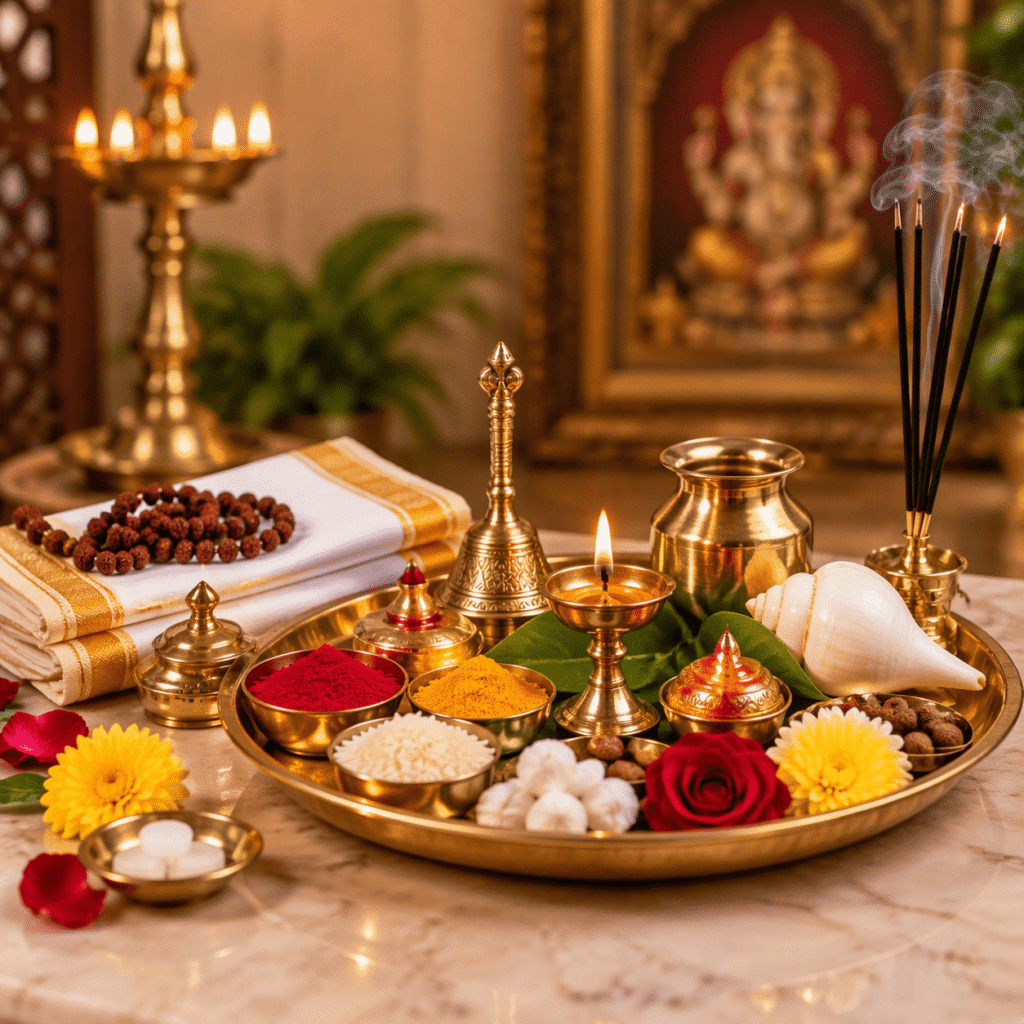
Every Hindu home has its own way of expressing devotion. For some families, daily worship begins with lighting a diya and offering prayers before the household deity. For others, it includes flowers, incense, sacred water, mantras, and a carefully arranged puja thali.
Whatever form your worship takes, preparing the required puja samagri in advance helps make the experience peaceful, organized, and meaningful.
If you are wondering what puja items to keep at home, which materials are commonly used in Hindu rituals, or what additional samagri may be needed for festivals and special ceremonies, this guide will help you get started.
At Bhakti, we believe that understanding the significance and traditional use of puja essentials is an important part of preserving India’s rich devotional heritage.
What Is Puja Samagri?
Puja samagri refers to the materials, ingredients, and accessories used during Hindu worship. The word samagri means the materials or things gathered for a particular purpose.
Depending on the ritual, puja samagri may include flowers, water, rice, turmeric, kumkum, sandalwood paste, incense, lamps, fruits, sweets, sacred threads, and other traditional offerings.
In Hindu worship, offerings are often described as upachara, or acts of respectful service to the deity. Some traditions follow Panchopachar Puja, which involves five forms of offering, while others follow Shodashopachar Puja, which involves sixteen upacharas. More elaborate forms of worship may include additional steps and materials.
There is no single list that applies to every Hindu ritual. The items required depend on the deity being worshipped, the occasion, regional customs, family traditions, and the specific puja vidhi being followed.
1. Complete Hindu Puja Samagri Checklist
The following checklist covers commonly used items for household worship. You do not need every item for a simple daily puja; select the materials appropriate for your practice.
A. Essential Puja Items for Daily Worship
1. Puja Thali (Worship Plate)
A puja thali keeps essential items arranged neatly in one place. Brass and stainless steel are common choices for household worship.
2. Diya or Deepak
A diya is an oil or ghee lamp used during worship and aarti. Brass, clay, and other traditional materials are commonly used. Choose a lamp suitable for your intended ritual.
3. Cotton Wicks (Batti)
Cotton wicks are placed in the diya and used with the appropriate lamp fuel. Keep extra wicks available for daily worship and festivals.
4. Ghee or Puja Oil
Ghee and various oils are used for lighting lamps according to the custom being followed. The preferred fuel can differ by deity, ritual, and family tradition.
5. Agarbatti and Dhoop
Incense sticks and dhoop are used as fragrant offerings in many forms of Hindu worship. Choose products suitable for your household and use them in a well-ventilated area.
6. Kapoor (Camphor)
Camphor is commonly used during aarti in many traditions. Store it safely away from heat and open flames.
7. Flowers and Leaves
Fresh flowers are frequently offered to deities. Certain leaves also have particular significance in specific forms of worship. For example, durva grass is associated with Ganesh worship, while Tulsi leaves are important in many Vaishnava traditions.
Follow the offerings prescribed for your chosen deity rather than assuming that every flower or leaf is suitable for every puja.
B. Traditional Puja Powders and Offerings
8. Haldi (Turmeric)
Turmeric is used in many Hindu ceremonies and auspicious occasions. It may be offered during puja or used as part of specific ritual preparations.
9. Kumkum or Roli
Kumkum and roli are commonly used for tilak and ritual offerings. Their preparation and use may vary across communities.
10. Chandan (Sandalwood Paste)
Chandan is used for tilak and deity worship in many traditions. Its use depends on the deity and the particular ritual.
11. Akshata (Unbroken Rice)
Akshata generally refers to rice prepared for ritual use, sometimes mixed with turmeric or other ingredients according to custom. It is used in various ceremonies and offerings.
12. Mauli or Kalava (Sacred Thread)
This sacred thread is used in several Hindu rituals. The method of tying or offering it varies according to the ceremony and tradition.
13. Gangajal or Sacred Water
Water is an important element of Hindu worship. Some households keep Gangajal for rituals, while others use clean water according to their customary practice.
C. Vessels and Puja Accessories
14. Kalash
A kalash is a sacred vessel used in many ceremonies, including certain forms of Lakshmi Puja, Navratri worship, and housewarming rituals. Depending on the vidhi, it may be filled with water and decorated with leaves, a coconut, or other prescribed materials.
15. Lota and Small Bowls
These vessels hold water, sandalwood paste, kumkum, rice, and other offerings. Copper, brass, and stainless steel are commonly used.
16. Bell (Ghanti)
A bell is used during worship in many traditions. Its use and timing depend on the ritual being performed.
17. Shankh (Conch Shell)
A shankh is associated with several Hindu devotional traditions and is used in certain forms of worship. Its use is not required for every household puja.
18. Aarti Accessories
Aarti accessories may include aarti lamps, camphor holders, and plates designed for presenting light during worship.
D. Bhog and Prasad Items
19. Fruits (Phal)
Fresh fruits are common offerings during daily puja and festivals. Select fruits according to the ritual and your family custom.
20. Sweets and Naivedya
Naivedya refers to food offered to the deity. Depending on the occasion, it may include fruits, homemade sweets, or other traditionally prescribed foods.
21. Panchamrit Ingredients
Panchamrit commonly consists of five ingredients: milk, curd, ghee, honey, and sugar. It is used in certain forms of worship, including some abhishek rituals. The ingredients and method of preparation should follow the relevant tradition.
22. Coconut, Betel Leaves, and Supari
Coconut, betel leaves, and areca nut (supari) are used in many traditional ceremonies. Their requirements and placement differ according to the ritual.
2. Puja Samagri for Different Hindu Rituals
While many items are shared across Hindu worship practices, special ceremonies often require additional materials.
Ganesh Puja
Common items may include a Ganesh murti or image, flowers, durva grass, a diya, incense, kumkum, akshata, water, and naivedya. Modak or other sweets may be offered according to family custom.
Explore: Daily Puja Kits and Divine Murtis.
Lakshmi Puja and Diwali
Common preparations may include a Lakshmi-Ganesh image or murti, a clean puja space, diyas, cotton wicks, ghee or oil, flowers, kumkum, turmeric, rice, fruits, sweets, and a kalash where prescribed.
Some families also prepare additional offerings according to their regional Diwali traditions.
Explore: Puja Accessories and Divine Murtis.
Shiva Puja and Abhishek
Depending on the tradition, Shiva worship may involve a Shiva Lingam or image, water, flowers, bilva leaves, a diya, incense, and other prescribed offerings. Some abhishek rituals use milk, curd, honey, or additional ingredients.
Follow the relevant puja vidhi for the required offerings and their appropriate use.
Havan and Yajna
Havan samagri is used in sacred fire rituals. Other materials may include a havan kund, suitable fuel, ghee, a ladle, and specific offerings or herbs required by the ceremony.
Havan requirements can vary considerably. For a formal havan or yajna, prepare the list according to the officiating priest’s instructions.
Explore: Havan Samagri.
Navratri and Devi Puja
Depending on the tradition, Navratri worship may include a Devi image or murti, flowers, kumkum, a diya, incense, fruits, sweets, a kalash, and materials for Ghatasthapana where observed.
Additional items may be required for daily Devi worship, fasting, kanya pujan, or other customary observances.
Satyanarayan Puja and Griha Pravesh
These ceremonies generally require a more detailed, occasion-specific list. Depending on the prescribed vidhi, materials may include a kalash, flowers, fruits, betel leaves, supari, sacred thread, rice, turmeric, kumkum, offerings, and ingredients for the relevant prasad.
Consult the priest conducting the ceremony for the complete list and quantities.
3. How to Arrange Your Puja Samagri at Home
A little preparation can make daily worship more convenient.
Step 1: Clean the puja space. Keep the mandir, altar, or designated worship area clean and organized.
Step 2: Arrange the essentials. Place the puja thali, diya, cotton wicks, lamp fuel, incense, water vessel, and other regularly used items within easy reach.
Step 3: Prepare fresh offerings. Wash and arrange flowers, leaves, fruits, and other offerings as appropriate for the ritual.
Step 4: Separate ritual-specific materials. Keep havan samagri, festival decorations, deity vastra, and special ceremony items together so they are easy to find when needed.
Step 5: Check your supplies. Before a festival or special puja, confirm the prescribed list and quantities rather than relying on a general checklist.
4. Tips for Choosing and Caring for Puja Samagri
- Choose suitable materials: Select products according to the ritual and the instructions of your tradition.
- Check ingredient labels: For consumable offerings, look for clear ingredient and packaging information.
- Keep items clean and dry: Store powders, cotton wicks, incense, and other dry materials in suitable containers.
- Care for brass and copper: Clean metal vessels with a method appropriate for the material, and dry them thoroughly before storage.
- Store flammable materials safely: Keep camphor, incense, oils, and cotton away from heat and open flames.
- Avoid unnecessary purchases: A simple daily puja does not require every item used in elaborate ceremonies.
- Respect regional customs: If your family follows a particular sampradaya or ritual tradition, prioritize its guidance.
5. Frequently Asked Questions About Hindu Puja Samagri
What are the basic puja items required for daily worship at home?
Common essentials include a diya, cotton wicks, ghee or oil, incense if used, flowers, water, kumkum or roli, and a suitable food offering. A puja thali, bell, chandan, and akshata may also be used according to family tradition.
Is the same puja samagri used for every Hindu deity?
No. Many items are shared across Hindu worship, but particular deities and rituals may have specific offerings. Ganesh Puja, Shiva Puja, Lakshmi Puja, and Devi Puja can each require different materials.
What is the difference between puja samagri and puja accessories?
Puja samagri generally refers to the materials and consumable offerings used in worship, such as flowers, rice, kumkum, incense, and havan ingredients. Puja accessories are the reusable objects that support worship, such as diyas, puja thalis, bells, kalash vessels, and camphor holders. The categories can overlap in everyday usage.
What is Panchamrit, and when is it used?
Panchamrit is a traditional preparation commonly made using milk, curd, ghee, honey, and sugar. It is used in certain Hindu worship rituals, including some abhishek ceremonies. Its preparation and use should follow the prescribed tradition.
Do I need a complete puja kit for daily worship?
Not necessarily. A simple daily puja can be performed with a small selection of appropriate items. A ready-made puja kit can be convenient for beginners, travel, festivals, or specific ceremonies, provided its contents match the ritual you intend to perform.
How can I prepare puja samagri for a festival?
Start with the festival-specific puja vidhi, make a checklist, and separate everyday essentials from special offerings and decorations. Confirm any priest-prescribed materials in advance, as regional customs and ritual requirements may differ.
How should puja samagri be stored?
Keep dry ingredients in clean, dry, labelled containers. Store reusable vessels and accessories after cleaning and drying them. Keep food offerings, flowers, and other perishable items fresh, and store flammable products safely.
Conclusion: Prepare for Worship with Bhakti
Puja samagri is more than a collection of ritual items. Each material has a place within the traditions through which families express reverence, gratitude, and devotion.
Whether you are preparing for daily worship, a festival, a havan, or a special ceremony, understanding the purpose of the required materials can make preparation simpler and more meaningful.
At Bhakti, our aim is to help devotees find traditional puja essentials for their household worship, from daily puja items and havan samagri to divine murtis, deity vastra, and puja accessories.
Explore the categories that suit your needs, prepare according to your family tradition, and approach every puja with care, sincerity, and devotion.
