
Daily puja
Complete Hindu Puja Samagri List for Home Worship
Oct
Hindu worship is a beautiful expression of devotion, gratitude, and reverence. Whether you perform daily puja at home or prepare for special occasions such as Diwali, Navratri, or Ganesh Chaturthi, keeping the required puja samagri ready helps make your preparations organized and meaningful.
Puja samagri refers to the traditional materials and offerings used during worship. From a simple diya and fresh flowers to sacred water, kumkum, and incense, each item has a place in different Hindu rituals.
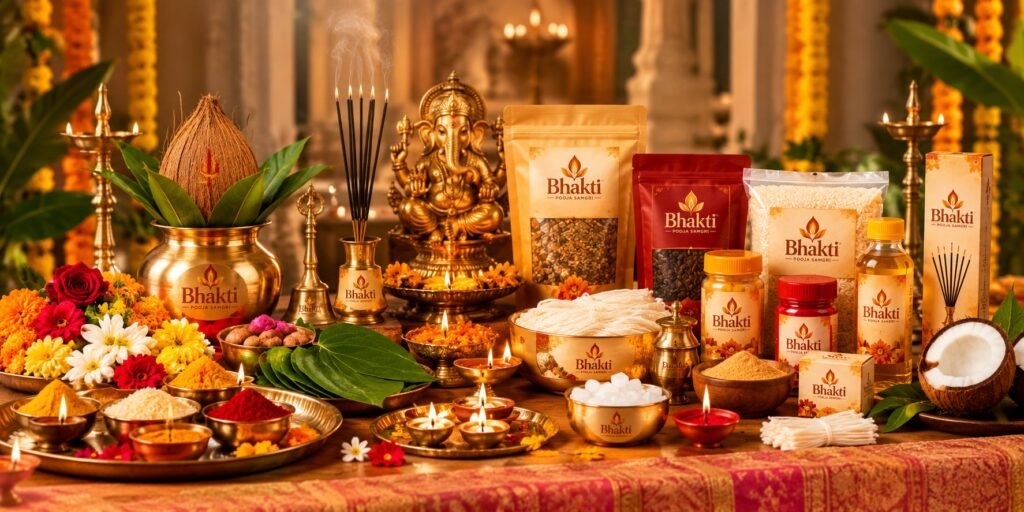
In this guide, Bhakti brings you a practical Hindu puja samagri list for home worship, covering everyday essentials, traditional offerings, and additional items used for special ceremonies.
1. Essential Puja Samagri for Daily Worship
The following items are commonly used in many Hindu households. The exact requirements depend on your deity, family tradition, and the puja vidhi you follow.
- Diya or Deepak: A traditional lamp used during worship and aarti. Brass and clay diyas are common choices.
- Cotton Wicks (Batti): Used with suitable lamp fuel for lighting the diya.
- Ghee or Puja Oil: Used for lighting lamps according to household custom.
- Agarbatti and Dhoop: Fragrant offerings used in many forms of Hindu worship.
- Kapoor (Camphor): Commonly used during aarti in several traditions.
- Puja Thali: A plate for arranging worship essentials neatly.
- Flowers and Leaves: Fresh flowers are widely offered, while particular leaves may be prescribed for specific deities.
- Kumkum or Roli: Used for tilak and other traditional ritual purposes.
- Haldi (Turmeric): Used in many auspicious ceremonies and puja preparations.
- Chandan (Sandalwood Paste): Used for tilak and deity worship in various traditions.
- Akshata (Rice): Rice prepared for ritual use, sometimes mixed with turmeric according to custom.
- Water and a Small Vessel: Water is used in different forms of worship and ritual offerings.
You may also keep a bell, a kalash, and small bowls for arranging the items you use regularly.
2. Traditional Offerings Used in Hindu Puja
Along with the basic essentials, certain offerings are used according to the occasion and prescribed ritual.
- Fruits and Naivedya: Fruits, sweets, or other suitable foods offered to the deity.
- Coconut: Used in many Hindu ceremonies and auspicious occasions.
- Betel Leaves and Supari: Commonly included in certain traditional pujas.
- Mauli or Kalava: A sacred thread used in several Hindu rituals.
- Gangajal or Sacred Water: Kept by many households for worship according to their custom.
- Panchamrit Ingredients: Milk, curd, ghee, honey, and sugar, commonly used to prepare Panchamrit for certain rituals.
- Kalash: A sacred vessel used in many ceremonies, sometimes decorated with leaves and a coconut according to the prescribed vidhi.
Not every puja requires all these materials. Follow the instructions relevant to your particular ceremony or family tradition.
3. Puja Samagri for Different Hindu Rituals
Different forms of worship may require additional items.
Ganesh Puja: Common materials include a Ganesh murti or image, flowers, durva grass, a diya, incense, kumkum, rice, and naivedya.
Explore Divine Murtis for traditional deity worship essentials.
Lakshmi Puja and Diwali: Preparations may include diyas, cotton wicks, ghee or oil, flowers, kumkum, turmeric, rice, fruits, sweets, and a kalash where prescribed.
Browse Daily Puja Kits for commonly used worship essentials.
Shiva Puja: Depending on the tradition, offerings may include water, flowers, bilva leaves, a diya, incense, and materials required for abhishek.
Havan and Yajna: These ceremonies may require havan samagri, a havan kund, suitable fuel, ghee, and specific offerings prescribed for the ritual.
Explore Havan Samagri for traditional havan essentials.
Navratri and Devi Puja: Depending on the custom, materials may include a Devi image or murti, flowers, kumkum, a diya, fruits, sweets, and kalash-related items.
Ritual requirements differ across regions and sampradayas. For elaborate ceremonies, consult the priest or follow the specific puja vidhi being observed.
4. How to Prepare and Store Puja Samagri
A few simple practices can help you keep your puja essentials ready:
- Clean your puja space and arrange frequently used items on a dedicated tray.
- Keep powders, cotton wicks, and other dry materials in clean, dry containers.
- Prepare fresh flowers, leaves, fruits, and food offerings as needed.
- Clean and dry reusable brass, copper, and other metal accessories before storage.
- Keep camphor, incense, oils, and cotton away from heat and open flames.
- Before a festival or special puja, check the complete list prescribed for that occasion.
A simple daily puja does not require every item used in an elaborate ceremony. Choose materials according to your needs and traditions.
